
› Forums › 2026 Spring Courses › GCSE-Literary-Mon
- This topic has 10 replies, 5 voices, and was last updated March 3, 2026 by
Beth.

-
AuthorPosts
-
-
at 11:33 #46952
VMWEdu
Keymaster -
at 19:16 #46957
Beth
ParticipantSummary for Lesson 1
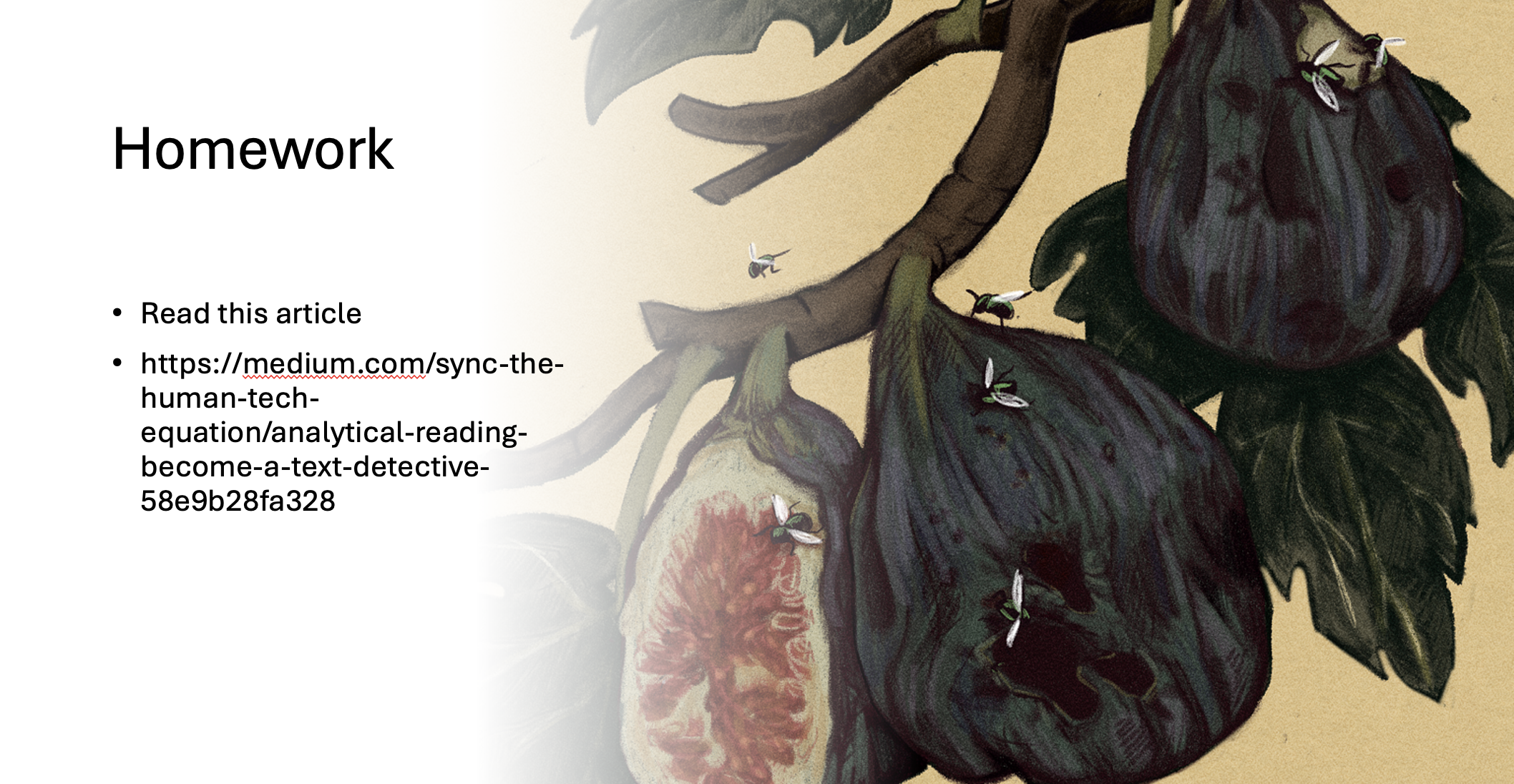
In this lesson, we began our work on literary analysis within the GCSE context, laying the foundations for the following weeks. We analysed Sylvia Plath’s The Fig Tree passage, focusing on developing a deeper, more thoughtful approach to literary analysis. We discussed the importance of avoiding simple “technique spotting” and instead reading like a detective- paying close attention to patterns, word choices, and underlying meanings. Through close reading, we explored how literary devices are used to shape ideas rather than exist in isolation. In particular, we focused on two key literary devices and considered building arguments around Plath’s exploration of choice, identity, and paralysis that we can take and apply the lessons of to any future GCSE analysis we do. Fantastic work everyone, well done for all your wonderful ideas and contributions. See you next week 🙂
Homework
Attachments:
You must be logged in to view attached files. -
at 09:45 #47052Participant
Summary for Lesson 2
In this lesson, students focused on developing stronger analytical writing by moving beyond simply spotting language features. Rather than just identifying techniques (such as similes, metaphors, or repetition), students practised forming interpretative ideas about why the writer uses them and what they suggest. The lesson emphasised the difference between narration, summary, and analysis. Students learned to avoid retelling the text and instead make thoughtful claims about meaning, effect, and writer’s intention. We analysed a passage together and thought about how to make sure our points start with a claim that is up for debate. Wonderful work everyone, well done for all your fantastic ideas and see you soon 🙂
Homework
Attachments:
You must be logged in to view attached files. -
at 20:34 #47073Participant
-
at 20:20 #47110
-
-
at 11:50 #47075Participant
How does the writer use language and structure to present the theme of death?
The writer uses language and structure to present the theme of death by having a gradual progression across the passage. We can see this from when the author says “ slowly the damp and rot would infest the pine boxes” then continues to say “slowly it would touch their flesh” and “ finally it would consume the last vestiges of their substances.” The use of a semantic field shows the progression of life year after year and as it all comes to a halt where the author describes it as a “ meaningless part of that stubborn earth.” This message the writer is trying to give us is the cycle of working people go through just to be buried in the soil. The theme of death is amongst the quotes as time passes by, it all comes down to nothing and perhaps this shows us the writer questions of what the point of life is. The repetition of the word slowly leads us to the layers and emphasizes gradual development of life and the word finally shows the end of life. Perhaps it is trying to tell us that death is a process of erasure, by which the meaning of life is finally revealed.
-
at 20:23 #47112
-
-
at 20:16 #47083Participant
Hi Beth
I have attached my HW.
Thank you!
Sarah
Attachments:
You must be logged in to view attached files.-
at 20:28 #47114
-
-
at 20:29 #47116Participant
Summary for Lesson 3
In this lesson, we explored how poets use tone and language to convey meaning, focusing on History by John Burnside as a case study. Students examined how Burnside’s choice of words, imagery, and rhythm builds a reflective, sometimes mournful tone, and how this shapes the reader’s understanding of memory, loss, and the passage of time. We discussed how identifying tone helps unlock deeper meanings in a poem and sets the stage for a structured PETAL analysis. Building on this, students practiced applying the PETAL method to unpack lines from History & everyone worked on linking observations back to the central idea of the poem, showing careful thought about how form, imagery, and diction interact. I was so impressed by the insight and attention to detail today. You all engaged thoughtfully with the poem brilliantly; it was a pleasure to see your ideas develop. Well done everyone! 🙂
Homework
Attachments:
You must be logged in to view attached files.
-
-
AuthorPosts


- You must be logged in to reply to this topic.